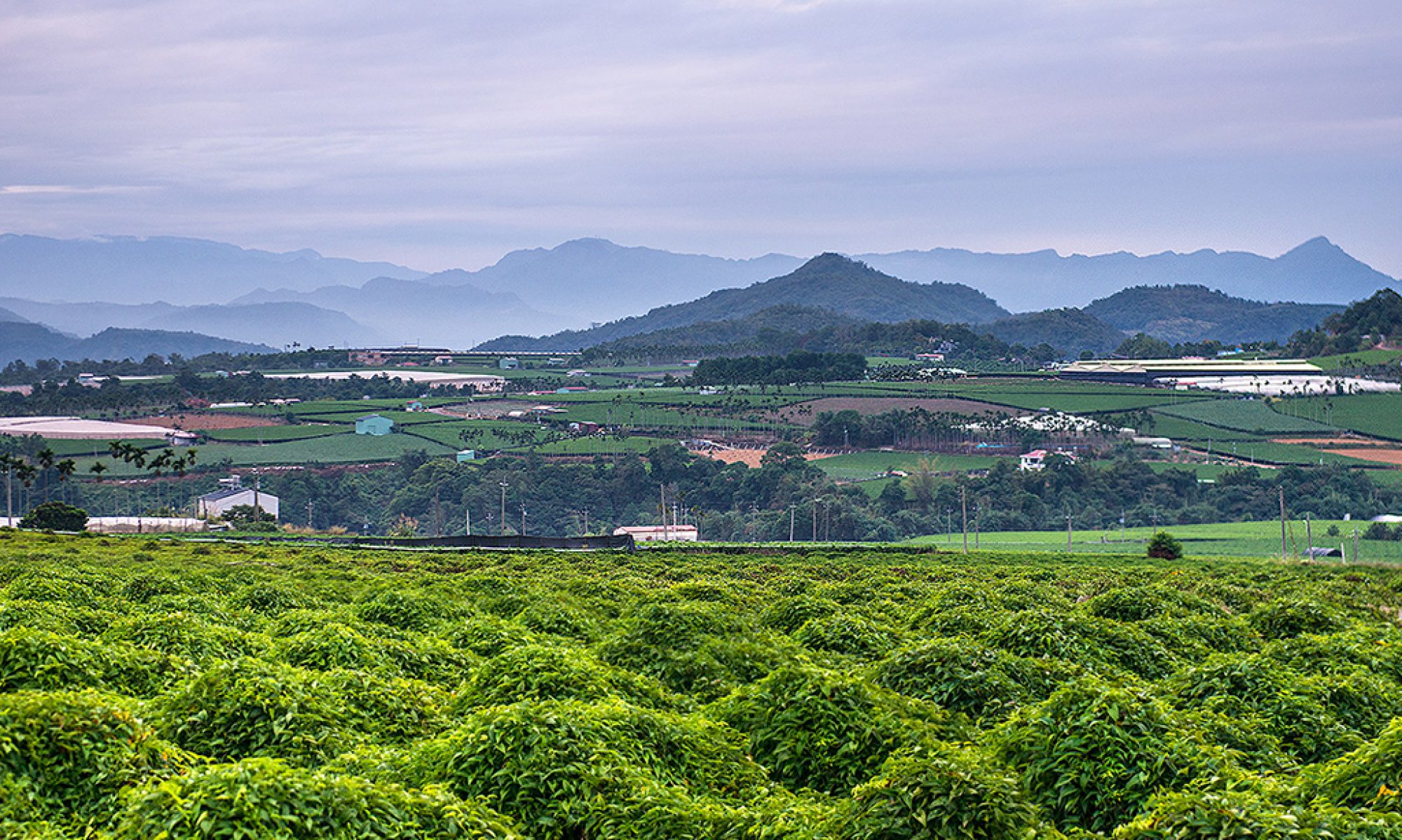
Taiwan is a very interesting place: a mix of high-tech amenities next to run-down buildings, some with all of its plumbing outdoors. Because of its past, Taiwan is stuck in a limbo of developing its smaller rural areas like Puli to architecturally stand like its larger areas like the capital of Taipei. Taiwan’s past lends itself to being exactly what it is today. There are people currently living on the island that lived through a time when everyone in sight was dirt poor. It wasn’t until the 1950s and 1960s that Taiwan began to industrialize, undergoing an enormous economic boom, following the example led by Japan. Along with the $4 billion in financial aid and soft credit provided by the US (as well as the indirect economic stimulus of US food and military aid) over the 1945–1965 period, Taiwan had the necessary capital to restart its economy. Further, the Kuomintang government instituted many laws and land reforms that it had never effectively enacted on the Republic of China. Thanks to the Taiwan Miracle, it was able to establish itself as an up-and-comer on the world stage. Today, Korea and Taiwan are world leaders in manufacturing electronics components and devices which is clear is you walk into any phone or department store.
“Garbage Island”
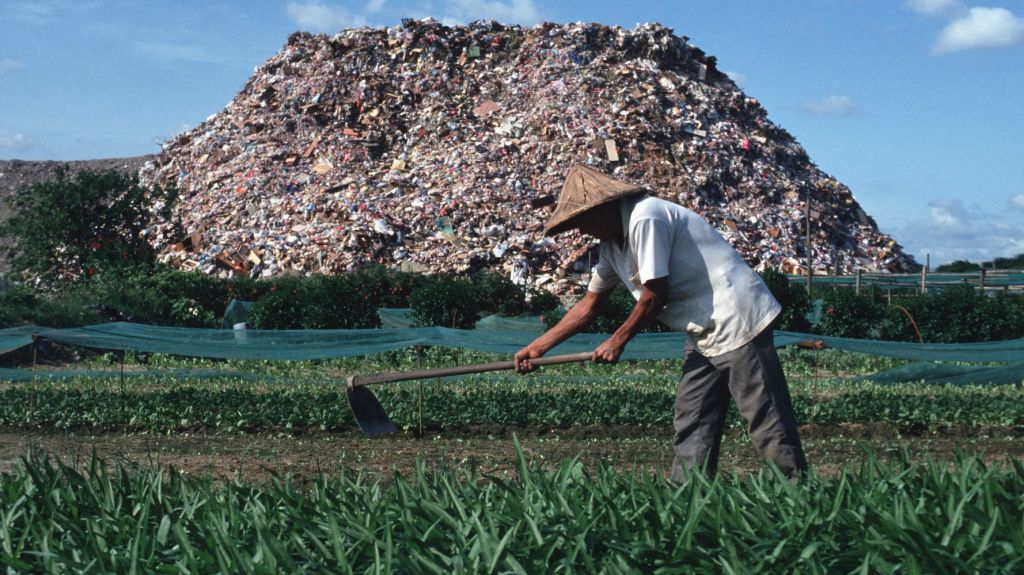
After this huge economic success, Taiwan was seeing an extremely high garbage output, leading to its reputation of “Garbage Island”. With the ability to get things in plastic bottles and enough food to get more than your share, the people didn’t know how or what to do with the new amount they were able to waste and trash, which led to a horrible garbage problem because a true recycling program had never needed to be put in place. People burned trash in the streets in protest. Grassroots NGOs and individual advocates waged what the press dubbed a “trash war” to pressure the government to reform the country’s waste management system. With the increased levels of waste, Taiwan tried something crazy – they removed almost all public dumpsters and garbage cans and starting in 1989, a new recycling program in response to a 1987 amendment to the Waste Disposal Act was created. What I thought would lead to people littering even more did just the opposite – it worked.
How this works
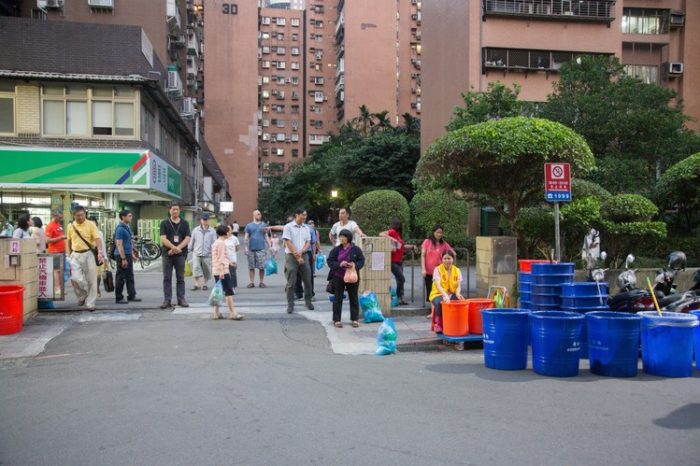
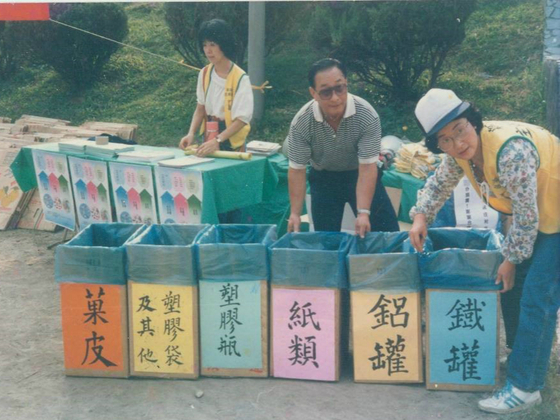
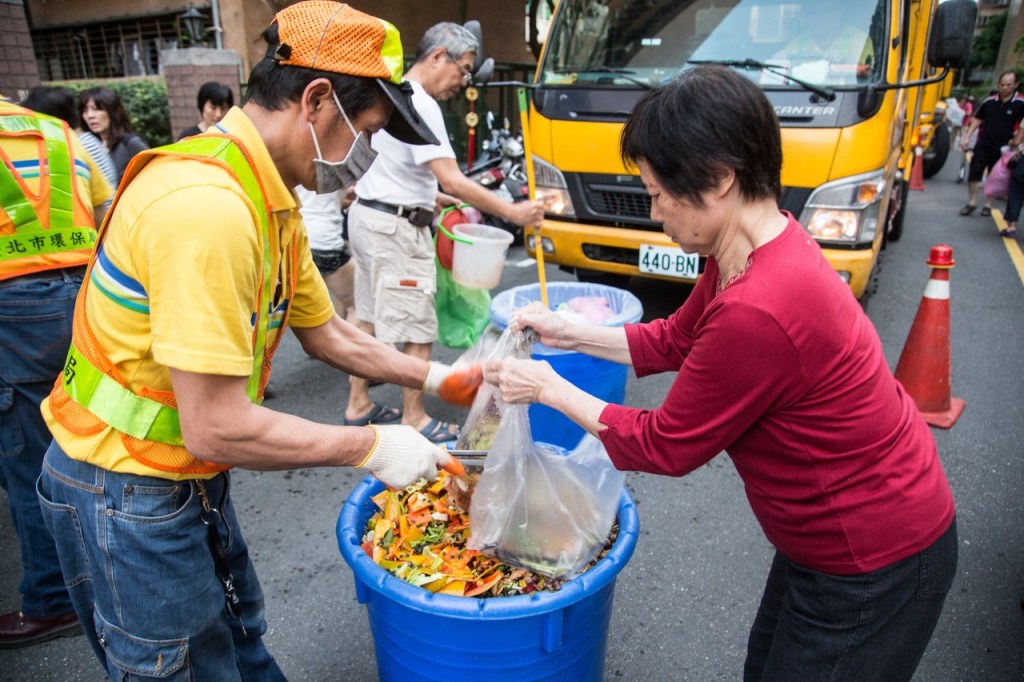
Taiwan has become a global leader in recycling, with one of the highest recycling rates in the world. The country manages to recycle more than 50% of it’s municipal waste, making it only a little bit behind the world’s leading nation for recycling, Germany, and way in front of the United states. Under the new rules, recyclables were reclassified into eight groups: containers, tires, pesticide containers, lubricant oil, lead-acid batteries, vehicles, home appliances, and communication products. Each of these materials were the responsibility of one commission, and the commissions themselves were overseen by the Environmental Protection Administration. Now the citizens became responsible for bringing their own trash to a collection point (for me, it’s right outside my door). It’s fun to see all your neighbors waiting outside, giving me the chance to make a complete fool of myself as the American on the block figuring all of this out. (Once again, the people of Taiwan have proven to me very supportive and helpful, though, thankfully!) The garbage truck comes to these collective points roughly four times a week so the removal of trash is always moving.
In some bigger areas like Taipei City, recycling and garage disposal is be done with specifically colored bags that need to be brought to their local convenient stores. Raw food waste is processed to be further used as fertilizer by farmers. Cooked food waste is processed to be further turned into food for livestock. There are 33 items considered recyclable, which in turn fall into 13 categories, today. Not all recyclables are collected daily; the most common recyclables have a specially designated pickup day, so you do need to do a little research and ask for help when you first start doing this. Is this complicated? Of course! Is it effective? Absolutely.
The musical garbage truck
Yes, you read that right. Not only does the garbage truck come to my front door four times a week to pick up my garbage, it plays classical music, my local garbage truck currently playing Beethoven’s “Fur Elise”. This is to alert the neighborhood of it approaching because it only stops for a few seconds before driving down the road – we have a rough estimate of when the truck will come but the real indication is the loud classical music you hear approaching. Christmas music is played around Christmas time and during Chinese New Year, traditional songs are played to celebrate the island. Occasionally, prerecorded English lessons are also played. Although it does come four times a week, it comes to my house at a time I am at work so I usually can get rid of garbage once a week. Like showed in the video, you get to know where the collection locations are and citizens will scooter or run from blocks away to drop off their trash – all separated and color-coded – of course.
It’s been a little crazy having so many things be different here in Taiwan; garbage was something that I never imagined taking this much effort and concentration… but I like it. There has already been a time on a Sunday where my eyes are drooping as I lay down for a little nap but then, you hear the garbage truck’s tune coming down your street. If I haven’t taken out the garbage in a few days, I know this may be my only opportunity for a bit so I have to think fast and move it. It’s a challenge, it’s a change, but it’s truly an efficient system. Overall, the people of Taiwan are very conscious and proud of this amazing accomplishment they have done in such a short amount of time and they should be! Recently, more countries have been following in their footsteps and I think the United States could really learn something from Taiwan when it comes to waste management.
Thanks for reading! There is still so much more to come! Next, I will talk about my little apartment that I have in Taiwan and what I have been trying to make it a home. Stay tuned for more!
Until next time, this has been
Emma Eiden, An ESL Teacher Abroad
 An ESL Teacher Abroad